
We are independent LR partners. Product links lead to our own product pages, and orders are placed in the official LR shop.
Probiotics for women are products with live bacteria that are marketed for digestion, intimate health or pregnancy, but the evidence behind them is mixed and depends on the exact strain studied. Research has looked at vaginal flora, recurring thrush and bacterial vaginosis, urinary infections and pregnancy, yet good-quality studies are limited and results do not apply to every product. No probiotic claim is authorised in the UK or the EU, so a label cannot promise you any of these effects.
This article explains what probiotics are, what researchers have studied in women specifically, how to read a label, and when symptoms need a GP or pharmacist rather than a supplement. We also say where bacterial culture capsules fit in, honestly and without promises.
In short
- Probiotics are defined as live microorganisms that give a health benefit when taken in adequate amounts, and effects are specific to individual strains.
- Products sold for women usually contain lactobacilli, the bacteria that naturally dominate a healthy vaginal flora.
- Studies on intimate health and pregnancy exist, but most are small and the results are not consistent enough for firm conclusions.
- In healthy people the most common side effect is wind, according to the US Office of Dietary Supplements.
- Itching, unusual discharge, pain when passing urine or symptoms in pregnancy need a pharmacist or GP, not a supplement.
What are probiotics, and why are some sold for women?
Probiotics are defined by international experts as live microorganisms that, when given in adequate amounts, provide a health benefit to the person taking them. The fact sheet of the US Office of Dietary Supplements stresses two points that are easy to miss in advertising: the effects of probiotics can be specific to certain strains, and products with higher counts are not necessarily more effective.
Products marketed for women usually contain strains of Lactobacillus or related bacteria. The reason is biological rather than mysterious. In most women of reproductive age, lactobacilli are the main bacteria in the vagina. They produce lactic acid and help keep the environment slightly acidic. When this balance changes, for example after antibiotics, during hormonal shifts or for reasons that are not always clear, conditions such as bacterial vaginosis or thrush can develop more easily.
The idea behind products for women is therefore that adding lactobacilli might help maintain that balance. It is a reasonable hypothesis, but a hypothesis is not the same as proof. Our general guide to what probiotics are and who might benefit explains the basics in more detail.
What has research looked at in women?
Studies on probiotics in women fall into a few main areas. The overview below summarises them in plain terms. It is not a recommendation for any condition, and none of these areas has an authorised health claim.
| Area studied | What researchers looked at | How strong the evidence is |
|---|---|---|
| Bacterial vaginosis | Whether lactobacilli, taken by mouth or used vaginally, alongside or after standard treatment change how often it returns | Mixed results from mostly small studies; treatment comes from a doctor |
| Recurring thrush | Whether lactobacilli reduce recurrences alongside antifungal treatment | Limited and inconsistent; not a replacement for treatment |
| Urinary infections | Whether certain strains reduce how often infections come back | Few good studies; no clear conclusion |
| Pregnancy and babies | Whether probiotics taken in pregnancy and given to babies affect the risk of eczema in the child | Some studies suggest a possible effect, depending on strain and who takes it; not conclusive |
| Antibiotic-related diarrhoea | Whether probiotics started early in a course of antibiotics reduce loose stools | Some benefit mainly in children; less clear in adults |
| Digestive comfort and irritable bowel syndrome | Whether probiotics ease bloating and other symptoms | Some people report relief; best strains and doses are unclear |
The US Office of Dietary Supplements notes that studies on probiotics in pregnancy have mainly focused on eczema in babies, with mixed results. On antibiotic-related diarrhoea, it reports that taking probiotics within two days of the first antibiotic dose appeared more effective in studies, while the benefit was not significant for adults in one analysis. For irritable bowel syndrome, the German health institute IQWiG writes that several studies found probiotics relieved symptoms in some people, but that it is unclear which bacterial types and doses work best.
Are probiotics safe for women, including in pregnancy?
For healthy adults, probiotics from food and supplements have a long history of use. The US Office of Dietary Supplements lists wind as the main side effect in healthy people. The risks are different for people who are seriously ill or have a weakened immune system, in whom rare but serious infections have been reported. Premature babies are another group in whom probiotics are only used under medical supervision.
If you are pregnant, breastfeeding, trying to conceive, taking medicines that affect your immune system or have a serious illness, speak to your midwife, GP or pharmacist before starting any supplement. This is the general advice for all food supplements in pregnancy, not something specific to probiotics.
Why can no product promise these effects?
In the UK and the EU, any statement on a food or supplement that suggests a health benefit must be authorised and listed in the official register of nutrition and health claims. The word probiotic is itself generally treated as implying a health benefit, and no claim for probiotics has been authorised. This is why many products in Britain describe themselves as containing live cultures or bacterial cultures instead.
For you as a buyer, the practical message is simple. If a product for women promises to protect intimate health, prevent infections or keep you healthy during pregnancy, it is going further than the law allows and further than the evidence supports. Our article on why supplements can only say certain things explains these rules in more detail.
What should you look for on the label?
If you decide to try a bacterial culture supplement, a good label helps you compare products and discuss them with a pharmacist. Look for:
- the full name of each strain, including genus, species and strain code, rather than only a general name such as lactobacillus;
- the number of live bacteria, usually given in colony-forming units (CFU), and whether the number is guaranteed until the end of the shelf life;
- storage instructions, because some cultures need to be kept cool;
- the recommended daily dose and how long the manufacturer suggests taking it;
- other ingredients, if you avoid lactose, gluten or animal products.
Give any product a fair trial of a few weeks and note how you feel. If nothing changes, there is little point in continuing. Fermented foods such as natural yoghurt and kefir are an everyday way of eating live cultures as part of a varied diet, and fibre-rich foods feed the bacteria you already have.
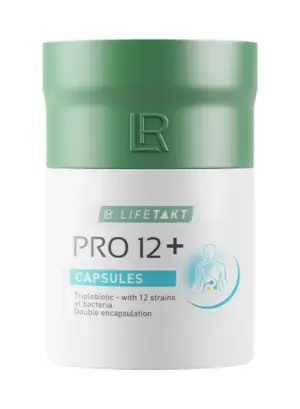
In the LR range there are PRO 12+ capsules with bacterial cultures. The label and our product page give the details of the cultures and the storage advice, so you can compare them with the checklist above. The capsules are a food supplement and are not intended to treat or prevent any condition. You will find other daily products in our supplements category.
The product mentioned in this article:
When should you see a doctor?
Intimate and urinary symptoms are common, but they need the right treatment, which a supplement cannot provide. Speak to a pharmacist or GP if you have:
- unusual vaginal discharge, especially if it smells fishy, is grey, green or yellow, or looks like cottage cheese;
- itching, soreness or pain during sex;
- pain or burning when passing urine, needing to wee often, or cloudy or bloody urine;
- symptoms that come back four or more times a year;
- any of these symptoms while you are pregnant;
- bleeding between periods, after sex or after the menopause.
Seek urgent help if you have a high temperature, pain in your back or side, shivering or feel very unwell together with urinary symptoms, as these can be signs of a kidney infection. A sexual health clinic is also a good place to go for confidential advice and testing.
Frequently asked questions
Do women need different probiotics from men?
Not necessarily. Products for women often contain lactobacilli associated with vaginal flora, but the evidence for specific benefits is limited. The strain, the amount and your reason for taking it matter more than the label saying it is for women.
Can I take probiotics while on antibiotics?
Many people do, and some studies have looked at starting probiotics within the first two days of an antibiotic course. Ask your pharmacist about timing, because some products are best taken a few hours apart from the antibiotic.
Is yoghurt enough?
Natural yoghurt with live cultures is a nutritious food and a good part of a varied diet. It contains fewer and different bacteria from most supplements, but for most people a balanced diet is more important than any specific product.
Can probiotics cause bloating?
Some people notice more wind or bloating in the first days. This usually settles. If it does not, or you feel unwell, stop taking the product and speak to a pharmacist.
Sources
- NIH Office of Dietary Supplements: Probiotics fact sheet for health professionals
- NIH Office of Dietary Supplements: Probiotics fact sheet for consumers
- InformedHealth.org (IQWiG): Irritable bowel syndrome, what helps and what doesn’t
- European Commission: EU Register of nutrition and health claims
Food supplements are not medicines and do not replace a varied, balanced diet and a healthy lifestyle. This article is general information and not medical advice; if you have symptoms or take medication, please speak to your GP or pharmacist.