
We are independent LR partners. Product links lead to our own product pages, and orders are placed in the official LR shop.
A good moisturiser for dry skin combines three kinds of ingredients: humectants that draw water into the outer skin layer, emollients that smooth and soften it, and occlusives that form a light film to slow water loss. Glycerin, urea and hyaluronic acid are common humectants; plant butters, oils and ceramides are typical emollients; and petrolatum, waxes and some silicones act as occlusives.
This plain guide explains what each group does, how to read the ingredient list on the back of a jar, which ingredients can irritate dry skin and where aloe vera fits in.
In short
- Humectants such as glycerin, urea and hyaluronic acid attract and hold water in the outer layer of the skin.
- Emollients such as shea butter, plant oils and ceramides fill the gaps between skin cells and make the surface feel smoother.
- Occlusives such as petrolatum and beeswax form a film that reduces water loss, which is why richer creams feel more protective.
- In the UK and EU, cosmetic ingredients are listed in descending order of amount, down to those under 1 percent.
- Aloe vera gel is about 99 percent water and is used in creams as a light, moisturising base ingredient.
What makes a moisturiser work on dry skin?
Dry skin loses water through a weakened outer layer. A moisturiser for dry skin tackles the problem from two sides: it adds substances that bind water and it adds fats that help keep that water where it belongs. Mayo Clinic names urea, ceramides and glycerin (glycerol) among the helpful ingredients for dry skin, along with cocoa butter, shea butter and fatty acids. It also mentions petrolatum-based products for very dry areas.
No single ingredient does everything. A light gel that contains only humectants can feel pleasant but may leave very dry skin tight again within an hour, while a pure occlusive such as petroleum jelly protects well but feels heavy. Most good creams therefore contain something from each group.
What are humectants, emollients and occlusives?
The table sets out the three groups with examples you are likely to see on labels sold in the UK.
| Group | What it does | Typical INCI names on the label | How it feels |
|---|---|---|---|
| Humectants | Attract and hold water in the outer skin layer | Glycerin, Urea, Sodium Hyaluronate, Panthenol, Propylene Glycol, Sorbitol | Light, fresh, sometimes slightly sticky |
| Emollients | Smooth and soften the surface by filling gaps between skin cells | Butyrospermum Parkii Butter (shea), Simmondsia Chinensis Seed Oil (jojoba), Squalane, Ceramide NP, Caprylic/Capric Triglyceride | Soft, silky, nourishing |
| Occlusives | Form a film that slows water evaporation | Petrolatum, Cera Alba (beeswax), Paraffinum Liquidum, Dimethicone, Lanolin | Rich, protective, sometimes greasy |
Some ingredients belong to more than one group. Shea butter, for example, softens and also adds a protective layer, while urea attracts water and at higher concentrations helps loosen rough, flaky skin. That second effect is why foot creams often contain more urea than face creams.
How do you read an INCI list?
INCI stands for International Nomenclature of Cosmetic Ingredients, the standard naming system used on cosmetic labels. Under the EU Cosmetics Regulation, which the UK kept after Brexit, ingredients are listed in descending order of weight at the time they were added, and those below 1 percent may follow in any order. In practice, the first five or six ingredients make up most of the product.
Water usually comes first and appears as Aqua. Plant ingredients appear under their Latin names, so aloe vera is often written as Aloe Barbadensis Leaf Juice or Aloe Barbadensis Leaf Extract. If aloe vera is the first ingredient instead of water, the product uses aloe juice as its base.
Fragrance appears as Parfum. If a fragrance contains certain known allergens above a set level, they must be named separately at the end of the list, for example Linalool, Limonene or Citronellol. People who react to fragrance can use this part of the label to avoid the substances that trouble them.
Which ingredients can irritate dry skin?
Dry skin is more easily irritated because its barrier is weaker. A few ingredients are worth noticing:
- Strong detergents in cleansers, such as sodium lauryl sulfate, which Mayo Clinic notes can irritate the skin and make dryness worse.
- High amounts of drying alcohol, listed as Alcohol or Alcohol Denat., near the top of the list in a leave-on cream.
- Strong fragrance or essential oils, which some people tolerate well and others do not.
- Exfoliating acids such as glycolic or salicylic acid used too often on skin that is already flaky and sore.
Fatty alcohols such as Cetearyl Alcohol and Cetyl Alcohol are a different matter. Despite the name, they are waxy emollients that help give a cream its texture, and they do not dry the skin.
Where does aloe vera fit in a moisturiser?
Aloe vera gel is the clear inner part of the aloe leaf. DermNet, the New Zealand dermatology resource, describes it as about 99 percent water, with the remaining 1 percent made up of sugars including polysaccharides, vitamins, minerals, enzymes and other compounds. In a cream, aloe acts mainly as a light, water-rich base that adds moisture and a fresh feel.
It is fair to be honest about the evidence. DermNet notes that its use for moisturising and soothing is based largely on experience rather than formal trials, and that people allergic to aloe or to plants in the lily family should avoid it. Aloe works best as part of a well-balanced formula with emollients and occlusives, not on its own as a solution for very dry skin. Our article on aloe vera gel on skin covers its everyday uses in more detail.
Which LR moisturisers use these ingredients?
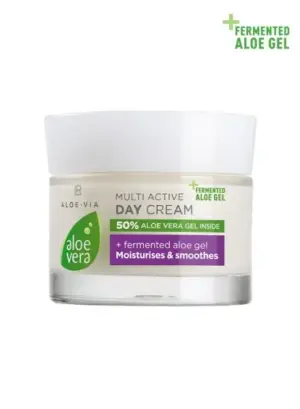
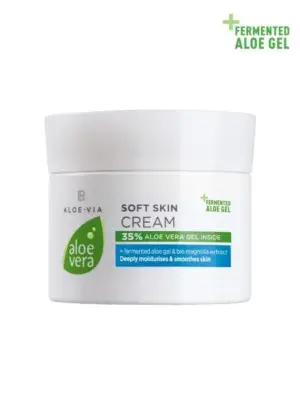
The LR Aloe Via range is built on aloe vera and combines it with emollients and humectants in different textures. For dry facial skin in the morning, the Aloe Vera Multiactive Day Cream is a light option that sits well under make-up. For face and body, the Aloe Vera Soft Skin Cream is a simple everyday cream for dry and sensitive skin. Before buying any cream, ours included, read the full INCI list on the product page and check it against anything you know you react to. Other products are listed in our aloe vera skincare category.
The two moisturisers discussed in this guide are here:
When should you get advice about dry skin?
Even the best ingredient list cannot solve every case. Speak to a pharmacist or GP if your skin remains dry despite regular moisturising, becomes red, itchy or painful, cracks and bleeds, or flakes over large areas. These can be signs of a skin condition that needs a different treatment. Our general guide to dry skin lists further warning signs.
Frequently asked questions
Is a higher price a sign of better ingredients?
Not necessarily. Many affordable creams contain glycerin, plant butters and petrolatum in good amounts. The ingredient list and the texture tell you more than the price.
Does hyaluronic acid work on dry skin?
Hyaluronic acid is a humectant that holds water in the outer layer of the skin, so it can make skin feel plumper and more comfortable. On very dry skin it works best under or inside a cream with emollients, so that the water is not lost again quickly.
Are natural ingredients always gentler?
No. Plant oils and extracts can cause allergic reactions just like synthetic ingredients. If you have sensitive skin, a short ingredient list and a patch test matter more than whether an ingredient is natural.
How long should I test a new moisturiser?
Give it at least two to four weeks of daily use, unless it stings or causes redness, in which case stop straight away. The outer skin layer renews itself over several weeks, so improvements build gradually.
Can I mix two moisturisers?
You can layer a light gel or serum under a richer cream. Apply the thinner product first, wait a minute, then apply the richer one on top.
Sources
- Mayo Clinic: Dry skin, diagnosis and treatment
- InformedHealth.org: Skin care and topical treatments
- DermNet: Aloe vera and the skin
We are independent LR partners and do not speak for LR Health & Beauty.