
We are independent LR partners. Links in this article lead to our own product pages, and orders are placed in the official LR shop.
Aloe vera gel is a light, water-rich gel that many people keep in the bathroom for skin that feels hot, dry or irritated. It works well as a cooling, moisturising layer after a day in the sun, after shaving or on dry patches, and as a very light moisturiser in summer. It is not a treatment for burns or skin conditions, and a real burn needs first aid with cool running water, not a gel.
Below you will find what aloe vera gel actually is, everyday situations where it makes sense, how to apply it, how to do a patch test and when skin needs a doctor rather than a cosmetic product.
In short
- Aloe vera gel is the clear inner part of the aloe leaf, and it consists of about 99% water.
- On the skin it feels cooling and moisturising, which suits skin after sun, shaving or a long day in dry air.
- Scientific evidence for aloe on burns and skin conditions is limited, so it is best seen as everyday skin care.
- A patch test on the inner forearm is sensible before using any new gel on large areas or on the face.
- Burns should first be cooled under cool running water for 20 minutes, and serious burns need medical care.
What is aloe vera gel?
Aloe vera gel is the clear, jelly-like tissue inside the thick leaves of the Aloe barbadensis plant. DermNet, the dermatology resource from New Zealand, describes it as the inner, colourless part of the leaf and notes that it is about 99% water, with the rest made up of vitamins, minerals, enzymes, sugars and other plant compounds.
It is different from aloe latex, the yellow sap just under the leaf skin, which contains bitter compounds called anthraquinones. Cosmetic gels are made from the inner gel. When you buy a product, the ingredient list usually names it as Aloe Barbadensis Leaf Juice, and its position in the list tells you how much the product contains: the higher up, the more aloe.
What does the research say about aloe on skin?
Aloe vera has been used on skin for centuries, but good clinical evidence is thinner than its reputation suggests. The US National Center for Complementary and Integrative Health (NCCIH) reports that some studies suggest topical aloe gel may help with minor burns, while DermNet describes most traditional uses as largely anecdotal and notes that a Cochrane review found insufficient evidence for aloe in wound care.
The honest summary is that aloe gel is a pleasant, generally well tolerated skin care ingredient. It moisturises, feels cooling and suits many skin types. It is not a medicine, and it should not delay proper care for a burn, a wound or a skin condition.
When does an aloe vera gel make sense in everyday life?
The table below lists common situations where a gel is useful, and what else you can do at the same time.
| Situation | How to use the gel | What else helps |
|---|---|---|
| Skin feels hot and tight after a day outdoors | Apply a generous, cool layer and let it absorb | Drink water, wear loose clothing and use sun cream next time |
| After shaving legs, underarms or face | Pat a thin layer onto freshly shaved skin | Shave with the direction of hair growth using a sharp blade |
| Dry patches on elbows, knees or hands | Use the gel first, then a richer cream on top | Use lukewarm rather than hot water when washing |
| Light moisturiser on warm summer days | A thin layer on the face in the morning, under sun cream | Switch back to a richer cream when the weather cools |
| After waxing or epilating | A thin layer once the skin has calmed down | Avoid hot baths and tight clothing for a day |
If shaving regularly leaves your skin red and bumpy, our article on razor burn explains why it happens and how to adjust your technique.
How do you use aloe vera gel on your skin?
Start with clean skin. Take a small amount, about the size of a hazelnut for the face or a little more for a larger area, and spread it in a thin layer. The gel absorbs quickly and leaves a light, slightly cool feeling. On very dry skin, a gel alone may not be enough, so apply a cream on top once the gel has absorbed.
Many people like to keep their gel in the fridge in summer, because a cool gel feels especially refreshing on warm skin. Always close the tube or bottle after use, and use the product within the period shown by the open-jar symbol on the pack.
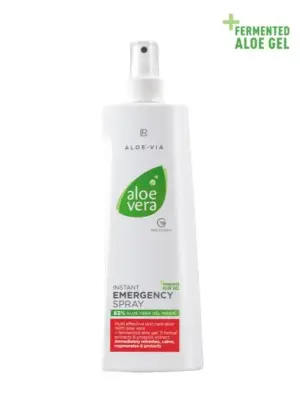
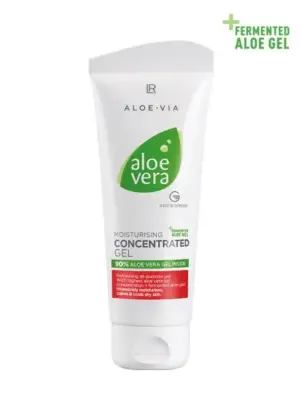
The Aloe Vera Moisturising Concentrated Gel from LR contains 90% aloe vera gel, according to the manufacturer. It is a versatile gel for face and body and suits skin that feels dry or tight. For larger areas or your back, a spray is often easier. The Aloe Vera Instant Emergency Spray contains 83% aloe vera, according to the manufacturer, together with extracts of several plants such as calendula, yarrow, chamomile and sage, and propolis. It can be sprayed without touching the skin, but it should be kept away from the eyes. You will find more aloe products in our aloe vera skincare category.
Both products are shown below:
How do you do a patch test?
Although aloe gel is generally well tolerated, some people react to it. NCCIH notes that burning, itching, rash and eczema have occasionally been reported, and DermNet states that people allergic to plants of the lily family, such as tulips and lilies, should avoid aloe. Products also contain preservatives and sometimes fragrance, which can cause reactions.
To do a patch test, apply a small amount of the product to the inside of your forearm and leave it for 24 to 48 hours. If redness, itching or swelling appears, wash it off and do not use the product. This is especially worth doing if you have sensitive skin or a history of allergies.
Is gel straight from an aloe plant a good idea?
Many people grow an aloe plant on the windowsill and use the gel directly. This can work, but home-cut gel is easily contaminated with the yellow latex from the leaf, which can irritate the skin, and it does not keep for long. Our article on using gel from your aloe vera plant explains how to do it more safely.
When should you see a doctor?
A cosmetic gel is not a substitute for first aid or medical care. For any burn, including a scald from a kettle, first cool the area under cool or lukewarm running water for 20 minutes, remove jewellery and clothing near the area unless it is stuck, and cover it loosely with cling film or a clean plastic bag. Do not use ice, butter or creams on a fresh burn.
Get medical help from your GP, an urgent treatment centre, NHS 111 or A&E if any of the following apply:
- The burn is larger than the palm of the injured person’s hand, or it is deep, white, charred or blistered.
- The burn is on the face, hands, feet, joints or genitals.
- The person is a young child, an older adult or pregnant.
- The burn was caused by chemicals or electricity.
- Sunburn comes with fever, chills, dizziness, a headache or large blisters.
- A skin problem does not improve within a couple of weeks or keeps coming back.
For more about caring for skin after too much sun, see our guide to aloe vera after too much sun.
Frequently asked questions
Can I use aloe vera gel on my face every day?
Yes, many people use it as a light moisturiser, especially in summer. If your skin is dry, add a cream on top, and do a patch test before the first use.
Is aloe vera gel good for sunburn?
It can feel cooling and soothing on skin that is hot after too much sun. It does not repair sun damage, so cool the skin first, drink water and seek medical help for severe sunburn.
Can I use aloe gel after shaving?
Yes, a thin layer on freshly shaved skin feels cooling and moisturising. Choose a product without strong fragrance if your skin is easily irritated.
Should aloe vera gel be kept in the fridge?
It does not need to be, but many people like the cooling effect in summer. Keep it closed and use it within the time shown on the pack.
Can children use aloe vera gel?
Many cosmetic gels are suitable for children, but check the product label and do a patch test first. Any burn in a young child should be checked by a doctor or pharmacist.
Sources
This article is general information and not medical advice. We are independent LR partners and do not speak on behalf of LR Health & Beauty.