
We are independent LR partners. Links in this article lead to our product pages, and orders are placed in the official LR shop.
Razor burn is the red, stinging, sometimes itchy rash that appears within minutes or hours of shaving, and it is caused by friction and tiny cuts in the top layer of the skin. The usual culprits are a blunt blade, shaving dry or with too little lather, pressing too hard and going over the same area many times. It normally settles within two or three days, and a kinder shaving routine with a sharp blade, a proper gel and a soothing balm prevents most of it, whether you shave your face, legs, underarms or bikini line.
Below we explain what razor burn is and how it differs from razor bumps, the habits that cause it, a gentle shaving routine step by step, how to calm skin that is already sore, and when it is worth asking a pharmacist or GP.
In short
- Razor burn is short-lived irritation from shaving, while razor bumps are ingrown hairs that develop a few days later.
- A blunt or clogged blade drags across the skin and is one of the most common causes of shaving rash.
- Shaving on warm, damp skin with a gel or foam, in the direction of hair growth, reduces friction considerably.
- Strongly scented or alcohol-based aftershaves can sting freshly shaved skin, and fragrance ingredients are a known trigger of contact allergy.
- Painful, spreading spots, pus or a fever after shaving are signs of infection and should be checked by a pharmacist or GP.
What is razor burn?
Razor burn is a form of skin irritation caused by shaving. A razor does not only cut hair; it also scrapes away a thin layer of skin cells from the surface. The outer layer of the skin, the epidermis, works as a protective barrier, according to IQWiG, Germany’s Institute for Quality and Efficiency in Health Care. When it is scraped too hard or too often, the skin becomes red, hot, tender and itchy, sometimes with a scattering of tiny red dots where hair follicles have been irritated.
It is easy to confuse razor burn with razor bumps, but they are different problems. Razor burn appears quickly and fades within a few days. Razor bumps are small, firm spots that develop several days after shaving when a cut hair curls back and grows into the skin. They are especially common in people with curly or coarse hair. If bumps rather than redness are your main problem, our article on razor bumps and ingrown hairs covers them in detail.
What causes a shaving rash?
Most razor burn comes down to friction. Anything that makes the blade drag rather than glide increases the risk. The table lists the most common mistakes and simple ways to put them right.
| Common habit | Why it irritates the skin | A kinder alternative |
|---|---|---|
| Using a blunt or rusty blade | The blade pulls the hair and scrapes the skin instead of cutting cleanly | Change the blade or cartridge as soon as it starts to tug |
| Shaving dry or with soap | There is little lubrication, so the blade drags | Use a shaving gel or foam on warm, damp skin |
| Pressing hard for a closer shave | Pressure pushes the blades into the skin surface | Let the weight of the razor do the work |
| Shaving against the grain straight away | Cutting against the hair direction lifts and irritates the follicles | Shave with the grain first and only go across if you need to |
| Going over the same area again and again | Each pass removes more skin cells | Reapply gel before a second pass and keep passes to a minimum |
| Splashing on a strong aftershave | Alcohol and fragrance can sting broken skin | Choose a calming balm and keep perfume away from freshly shaved areas |
Shaving cold skin straight out of bed is another frequent cause. The hair is stiffer and the skin less supple, so the blade meets more resistance. Sharing razors is also best avoided, because it spreads bacteria.
How do you shave without getting razor burn?
A gentle routine takes only a minute or two longer than a rushed one. These steps work for the face, legs, underarms and bikini line.
- Shave at the end of a shower or after holding a warm, damp flannel on the area for a minute, so that the hair softens and the skin is warm.
- Apply a thin, even layer of shaving gel or foam and give it a few moments to soften the hair further.
- Use a sharp, clean razor and shave with light strokes in the direction the hair grows.
- Rinse the blade under running water after every stroke or two, so that hair and gel do not clog it.
- If you want a closer finish, reapply gel and make one careful pass across the grain rather than straight against it.
- Rinse with cool water, pat dry with a clean towel and apply a soothing, fragrance-light balm or moisturiser.
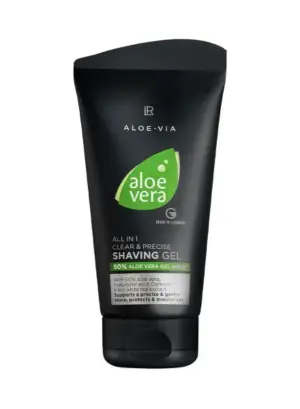
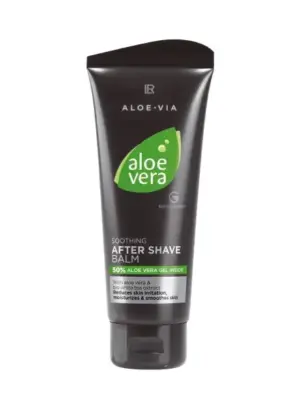
A transparent gel is particularly useful around beard edges, sideburns and the bikini line, because you can see exactly where you are shaving. The Aloe Vera Clear & Precise Shaving Gel is a clear gel designed for precise shaving and suits both men and women. Afterwards, the Aloe Vera Soothing After Shave Balm is a balm rather than an alcohol splash and is made to calm skin that feels irritated after shaving. You can find more products for sensitive skin in our aloe vera skincare category.
Are there special tips for legs, underarms and the bikini line?
Women often get razor burn in places where the skin is thin, curved or rubbed by clothing. On the legs, shave from the ankle upwards with the grain if your skin is sensitive, and take extra care over the knees and ankles, where the skin is bony. Under the arms, hair grows in several directions, so short strokes in different directions work better than long sweeps. Leave a few hours between shaving and applying deodorant, or choose one made for sensitive skin; our article on deodorant for freshly shaved underarms explains why. On the bikini line, trim long hair with scissors first, keep the skin taut with your free hand and wear loose cotton underwear afterwards to reduce rubbing.
For men with beards or stubble, it can help to trim with clippers rather than shaving every day, or to shave every second day so that the skin has time to recover. Our guide to keeping the skin under a beard comfortable has more ideas.
How can you calm razor burn once you have it?
Stop shaving the affected area until the redness has gone, usually two or three days. Rinse the skin with cool water or hold a clean, cool, damp flannel against it for a few minutes. Apply a gentle, fragrance-light moisturiser or balm, and avoid products with strong perfume or alcohol, which can sting. Wear loose clothing over the area and resist the urge to scratch or pick at any spots. If the skin is very itchy and sore, a pharmacist can recommend a suitable cream.
It is worth knowing that scents in cosmetics, perfumes and soaps are among the common triggers of allergic contact dermatitis, according to IQWiG. If a rash appears every time you use a particular aftershave, shower gel or deodorant, rather than only after shaving, the product itself may be the problem.
For a gentler shave, these are the two products we suggest:
When should you see a pharmacist or GP?
Ordinary razor burn does not need medical treatment. Ask a pharmacist or see your GP if you notice any of the following.
- The redness does not settle within a few days after you stop shaving.
- You develop painful spots filled with pus, or the redness spreads and the skin feels hot and swollen.
- You have a fever or feel generally unwell after a shaving rash.
- Bumps keep coming back and leave dark marks or raised scars.
- A rash appears every time you use a certain product, which may point to an allergy that needs testing.
Frequently asked questions
How long does razor burn last?
It usually fades within two or three days if you leave the area alone. Shaving over irritated skin keeps it going for longer.
Should I shave with or against the grain?
Shaving with the grain is gentler and causes less razor burn. If you want a closer finish, make one careful pass across the grain after reapplying gel.
Is an electric shaver better for sensitive skin?
Many people with sensitive skin find an electric shaver or clippers cause less irritation because they do not cut as close. A blade gives a smoother finish, so it depends on what matters more to you.
Can I use shower gel instead of shaving gel?
Shower gel and soap provide less lubrication and rinse away quickly, so the blade drags more. A gel or foam made for shaving protects the skin better.
Why do I get razor burn on my bikini line but not my legs?
The skin there is thinner, the hair is coarser and grows in different directions, and underwear rubs the area afterwards. Trimming first, a sharp blade and loose cotton clothing all help.
Sources
- InformedHealth.org (IQWiG): How does skin work?
- InformedHealth.org (IQWiG): Allergic contact dermatitis
- InformedHealth.org (IQWiG): Skin care for eczema (gentle washing and applying products in the direction of hair growth)
We are independent LR partners, not LR Health & Beauty itself. This article is general information and not medical advice.