
We are independent LR partners. Links in this article lead to our own product pages, and orders are placed in the official LR shop.
Probiotics are live microorganisms, mostly bacteria and some yeasts, that are added to foods or sold as supplements in the hope of a health benefit. Whether they help depends on the exact strain, the amount and the person taking it, and for most healthy adults the evidence is still limited. Fermented foods such as live yoghurt and kefir are an easy way to include live cultures in an ordinary diet.
In this guide you will learn what probiotics are, how they differ from prebiotics, what UK health advice says, why research results vary so much and how to read the label if you decide to try a supplement.
In short
- Probiotics are live microorganisms found in some fermented foods and in supplements.
- Each strain behaves differently, so a result from one strain cannot be applied to another.
- For most healthy adults, a varied diet with fibre and fermented foods matters more than any capsule.
- In the UK, many products say “live cultures” on the label because the word “probiotic” is treated as a health claim.
- People with a weakened immune system should speak to their doctor before taking probiotic supplements.
What are probiotics?
The word “probiotic” is usually used in the sense of the definition agreed by the Food and Agriculture Organization (FAO) and the World Health Organization in the early 2000s: live microorganisms that, when taken in adequate amounts, may benefit the person who takes them. The FAO’s food safety pages note that there is still no international agreement on how to test their efficacy and safety, which is why the two organisations published guidelines for evaluating them in 2002.
Most probiotics belong to two groups of bacteria, Lactobacillus (now split into several new genus names) and Bifidobacterium. A few products contain a yeast called Saccharomyces boulardii. Each of these groups contains many different strains, and each strain has its own code on the label, such as a combination of letters and numbers after the species name.
How are probiotics different from prebiotics?
Prebiotics are not alive. They are types of fibre that the bacteria already living in your gut can feed on. Onions, garlic, leeks, asparagus, slightly green bananas, oats and pulses are good everyday sources. Probiotics, by contrast, are the live microorganisms themselves.
The two work together in a simple way: the live cultures arrive, and the fibre provides food for the gut bacteria. If you want to read more about this partnership, see our article on prebiotic foods and probiotics.
What lives in your gut anyway?
Your bowel is home to a huge community of microbes. InformedHealth.org explains that many bacteria on and in the body support health, for example bowel bacteria that help break down food, and that fewer than 1% of bacteria are thought to cause disease. The same bacteria groups are used to make foods such as yoghurt, sauerkraut and cheese.
This community is shaped mostly by what you eat every day. A diet with plenty of fibre, a variety of plant foods and regular fermented foods feeds a varied gut flora. A supplement adds a small number of selected strains to that community, which is why it cannot make up for a diet that is low in fibre.
What does the evidence say about probiotics?
Research on probiotics is extensive but uneven. Studies often test one particular strain in one particular group of people, such as children with an infection or adults taking antibiotics, and the results cannot be transferred to other strains or other situations. Some studies show modest benefits, others show none.
A good example is diarrhoea. InformedHealth.org notes that probiotics are sometimes recommended for diarrhoea but that studies show they probably cannot make it go away faster. UK guidance from the NHS takes a similarly cautious line: probiotics are generally considered safe for healthy people, but the evidence for many of the claims made about them is limited, and they are sold as foods rather than as medicines.
For a healthy adult, this means a probiotic supplement is a personal choice rather than a necessity. If you decide to try one, it makes sense to choose a product that clearly names its strains and amounts.
Where can you find probiotics in food?
Several familiar foods contain live cultures, although the amounts and strains vary a great deal and heat treatment can kill them. The table below shows common sources.
| Food | What it contains | What to look for |
|---|---|---|
| Live or bio yoghurt | Lactic acid bacteria used in fermentation, sometimes with added strains | “Live” or “contains live cultures” on the pot |
| Kefir | A mix of bacteria and yeasts | Kept in the chilled section, unpasteurised after fermentation |
| Sauerkraut and kimchi | Lactic acid bacteria from fermentation | Chilled, unpasteurised jars; most shelf-stable jars are heat-treated |
| Some hard cheeses | Cultures used to make the cheese | Traditionally made, aged cheeses |
| Kombucha | Bacteria and yeasts from tea fermentation | Check sugar content, which can be high |
Why don’t UK labels always say “probiotic”?
In the UK and the EU, health claims on foods are tightly regulated, and only claims that have been assessed and authorised may be used. The word “probiotic” is generally treated as implying a health benefit, so many manufacturers describe their products as containing “live cultures” or “bacterial cultures” instead. The European Food Safety Authority explains that it assesses the science behind each claim, while the decision to authorise it lies with the authorities.
For you as a shopper, this means the label tells you less than the marketing might suggest. The useful information is the name of each strain, the number of colony-forming units (CFU) per dose, the storage instructions and the date until which the count is guaranteed.
How do you choose a probiotic supplement?
If you decide to try a supplement, use this checklist. Choose a product that lists each strain in full, states the CFU per daily dose until the end of its shelf life and explains how to store it. Take it at the same time every day, follow the dose on the pack and give it a few weeks before deciding whether you notice any difference.
LR’s PRO 12 + capsules are a food supplement with bacterial cultures; the number in the name refers to the twelve strains described by the manufacturer. The full list of strains, the amount per capsule and the recommended use are given on the pack and on the product page, and these are the details worth comparing with any other product you are considering. Other supplements are listed in our supplements category.
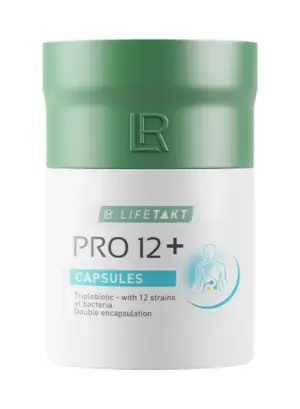
Women often have specific questions about live cultures, which we cover in our guide to probiotics for women.
When should you see a doctor?
A supplement is not the answer to ongoing digestive symptoms. See your GP if you have any of the following:
- Diarrhoea that lasts more than a week, or diarrhoea with blood or black stools.
- Persistent stomach pain, bloating that does not go away or a change in bowel habits lasting more than three weeks.
- Unexplained weight loss, a high temperature or signs of dehydration.
People with a weakened immune system, people who are seriously ill and anyone undergoing cancer treatment should not take probiotic supplements without medical advice. A pharmacy information sheet from BC Cancer, for example, explains that supplements are generally not recommended during cancer treatment because of the risk of infection. If you are pregnant, breastfeeding or taking medicines, ask your pharmacist first.
Frequently asked questions
Do I need to take probiotics every day?
Most healthy people do not need a probiotic supplement. If you choose to take one, follow the daily dose on the label, because live cultures generally do not stay in the gut for long after you stop.
Can I get probiotics from food alone?
Yes, fermented foods such as live yoghurt, kefir and unpasteurised sauerkraut contain live cultures. Eating them regularly as part of a fibre-rich diet is a sensible approach.
Should I take probiotics with antibiotics?
Some people take them during or after a course of antibiotics, but this is best discussed with your pharmacist or GP. They can tell you whether it is appropriate for you and how to time it.
Are probiotics safe?
For healthy people they are generally considered safe, although some notice mild wind or bloating at first. People with a weakened immune system should speak to their doctor before taking them.
What does CFU mean on a label?
CFU stands for colony-forming units and shows how many live microorganisms a dose contains. A good label states the CFU that is guaranteed until the end of the shelf life, not only at the time of manufacture.
Sources
- InformedHealth.org: What are microbes?
- InformedHealth.org: Diarrhea
- FAO: Food safety and quality, probiotics
- EFSA: Health claims
- BC Cancer: Pharmacy FAQ on probiotics
Food supplements are not medicines and should not replace a varied, balanced diet and a healthy lifestyle. This article is general information and not medical advice.