
We are independent LR partners. The product links in this article lead to our own product pages, and orders are placed in the official LR shop.
An anti wrinkle cream can make fine lines look softer, help skin feel smoother and keep it well moisturised, but it cannot remove deep wrinkles or reverse the way skin ages. The two habits that make the biggest difference over the years are protecting your face from the sun every day and keeping the skin barrier moisturised; a good cream works on top of those habits, not instead of them.
In this article we explain why wrinkles form, which cream ingredients have reasonable evidence behind them, what a cosmetic product is allowed to promise, and how to build a simple routine you will actually keep. We also say clearly when a skin change belongs with a GP rather than in your bathroom cabinet.
In short
- Wrinkles form because skin gradually becomes thinner and less elastic, and daily sun exposure speeds up that process.
- A moisturising cream plumps the surface layer with water, which makes fine lines look less obvious for as long as the skin stays hydrated.
- Ingredients such as niacinamide and vitamin C have small clinical studies behind them, while many other claims rest on manufacturer data.
- A broad-spectrum sunscreen in the morning is the single most useful anti-ageing step for your face.
- Deep wrinkles and loss of volume do not respond much to creams, so it helps to set realistic expectations before you buy.
Why do wrinkles appear in the first place?
Skin has three layers, and the middle one, the dermis, is built from collagen fibres that make skin both strong and stretchy. InformedHealth.org, the patient information service of the German institute IQWiG, notes that older people generally have thinner skin than younger people. As the years pass, the body makes less new collagen, the fibres become less orderly and the skin holds water less well. Lines that used to vanish when you stopped smiling start to stay.
Time is only part of the story. Ultraviolet light from the sun breaks down collagen and is the main reason why the skin on your face and the backs of your hands often looks older than the skin on your stomach. Smoking, very little sleep over long periods and repeated facial expressions also leave their mark. Genetics decide a good deal too, which is why two friends of the same age can have very different skin.
What can an anti wrinkle cream actually change?
A cream works mainly in the outer layer of the skin. When that layer is well hydrated, the cells swell slightly and reflect light more evenly, so fine lines around the eyes and on the forehead look less sharp. Skin that is no longer tight and flaky also looks fresher. These effects are real and visible within days, but they fade if you stop using the cream, because they depend on moisture rather than on rebuilding the deeper structure of the skin.
What a cream cannot do is fill a deep furrow, lift a jawline that has lost volume or replace what years of sun have taken. Wording such as “visibly smoother” or “skin feels firmer” is honest when it is supported by tests. When a brand quotes a percentage reduction in wrinkle depth, that figure comes from the manufacturer’s own study, and it is worth reading it as such: a small group of volunteers, a specific measuring method and usually a few weeks of use.
Which ingredients have evidence behind them?
Some ingredients have been tested in independent clinical studies, although most of the studies are small. A review by Boo published in the journal Antioxidants in 2021 summarises several split-face trials in which creams with 4 to 5 per cent niacinamide, applied for eight to twelve weeks, improved the appearance of fine lines and skin texture compared with the untreated side. A 2017 review by Al-Niaimi and Chiang on topical vitamin C describes two small placebo-controlled trials, with 10 and 20 participants, in which vitamin C serums improved the look of photo-aged skin over three to six months.
| Ingredient | What it does in a cream | How strong is the evidence? |
|---|---|---|
| Humectants (glycerin, hyaluronic acid, aloe vera) | Draw water into the outer layer so fine lines look softer | Good for hydration; the effect lasts while you use the product |
| Niacinamide | Supports the skin barrier and evens out the look of skin | Several small split-face studies at 4 to 5 per cent |
| Vitamin C | Antioxidant that helps protect skin from the effects of daylight | A few small trials; stability of the formula matters |
| Retinoids (such as retinol) | Speed up skin renewal | Well studied, but can irritate, so start slowly |
| Sunscreen (broad spectrum) | Reduces new UV damage to collagen | The most reliable way to slow visible ageing |
Notice that the best-supported step in the table is not a wrinkle cream at all. A sunscreen used every morning slows new damage, while every other product mostly works on what is already there.
How should you use sun protection if you want fewer wrinkles?
In the UK it is easy to think of sunscreen as something for holidays, yet daylight reaches your face on cloudy days and through windows as well. A moisturiser or sunscreen with broad-spectrum protection, applied generously every morning from spring to autumn, protects the collagen you still have. If you rely on the SPF in your foundation, bear in mind that it is usually applied too thinly. A small study led by dermatologist Zoe Draelos at Wake Forest University, published in 2001, found that foundation pigment began to move into the fine lines of the face after about two hours, and the researchers advised reapplying sunscreen over make-up for longer days outdoors.
Which cream suits your age and your skin?
A cream for your thirties and a cream for your fifties do different jobs. In your thirties the aim is mainly to keep skin hydrated and protected; in your late forties and beyond, skin tends to be drier and needs a richer texture. You can read more about these changes in our guide to how skin ages and in our article about a skincare routine for your 40s.
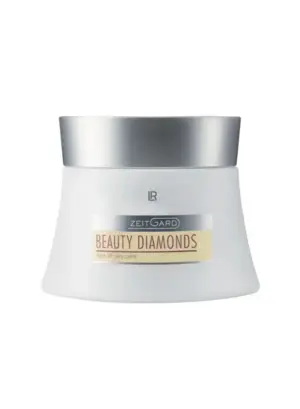
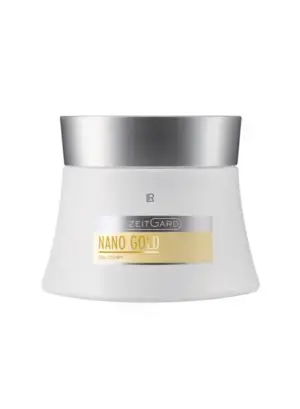
If you want a day cream for the first fine lines, our product page for the Zeitgard Nanogold Day Cream describes this lighter option from LR’s Zeitgard range, which LR built around gold and silk. For skin over 40 that feels drier and looks less defined around the contours, the Zeitgard Beauty Diamonds Day Cream has a richer texture. Whatever cream you choose, use sunscreen on top in the daytime, and judge the result after six to eight weeks rather than after a few days. Any figures that LR publishes for these creams are the manufacturer’s own test results.
These are the two day creams we mention in this article. You will find the whole range in our Zeitgard anti-ageing category.
What does a simple anti-ageing routine look like?
A short routine that you follow every day is better than a long one that you abandon after a fortnight. In the morning, wash your face with lukewarm water or a gentle cleanser, apply your day cream and finish with sunscreen. In the evening, remove make-up and sunscreen thoroughly, then apply a night cream or a serum. If you want to try a retinoid, start with two evenings a week and build up slowly, because redness and flaking are common at first.
Lifestyle shows on the face as well. Not smoking, sleeping reasonably well and eating plenty of vegetables, fruit and oily fish do not erase wrinkles, but they help skin look rested. Introduce only one new product at a time, so that you know which one to blame if your skin reacts.
When should you see a doctor?
Most wrinkles are a normal part of ageing and need no medical attention. Book an appointment with your GP or a pharmacist if a cream causes burning, swelling or a rash that does not settle within a day or two after you stop using it. See your GP promptly if you notice a mole or patch of skin that changes in size, shape or colour, a spot that bleeds or will not heal within a few weeks, or a rough, scaly patch on skin that gets a lot of sun. These signs need to be checked by a professional, and no cosmetic product should be used to cover them up.
Frequently asked questions
At what age should you start using an anti wrinkle cream?
There is no fixed age. Many people start in their late twenties or thirties with a simple moisturiser and daily sunscreen, which is what matters most at that stage. Richer anti-ageing creams tend to make more sense from the forties, when skin becomes noticeably drier.
Can an anti wrinkle cream get rid of deep wrinkles?
No cream can remove deep wrinkles. A good cream can make them look softer by hydrating the skin around them, but the change is modest and depends on regular use.
Do expensive creams work better than cheap ones?
Price alone does not tell you how well a cream works. Texture, ingredients, how pleasant it is to use and whether you protect your skin from the sun matter more than the cost of the jar.
How long does it take to see a result?
Hydration makes skin feel smoother within days. Changes in the overall look of fine lines usually take six to twelve weeks of daily use, which is also the length of most cosmetic studies.
Should I use a separate night cream?
A night cream is not essential, but many people like a richer texture in the evening, especially in winter. If your day cream contains sunscreen, a separate night product without SPF is a sensible choice.
Sources
- InformedHealth.org (IQWiG): How does skin work?
- Boo, Nicotinamide (niacinamide) for skin ageing and pigmentation, Antioxidants 2021
- Al-Niaimi and Chiang, Topical Vitamin C and the Skin, J Clin Aesthet Dermatol 2017
- Newswise: Think your foundation is protecting your face from the sun? (Wake Forest study, J Am Acad Dermatol 2001)
We are independent LR partners; this article reflects our own view and does not speak for LR Health & Beauty. It is general information and not medical advice.