
We are independent LR partners. Links in this article lead to our product pages, and orders are placed in the official LR shop.
Colostrum is the first milk a mammal produces in the days after giving birth, and the colostrum sold as a food supplement comes from cows. It is thicker and richer in protein than ordinary milk and contains higher levels of antibodies (immunoglobulins) and growth factors, which are there to protect and nourish a newborn calf. Adults take bovine colostrum mainly out of interest in these natural components, often around sport or busy periods, although the research in adults is limited and no health claim for colostrum has been authorised in the UK or the EU.
In this explainer you will find what colostrum is made of, why it has become popular, what the studies have actually looked at, who should avoid it, and what to check on the label if you decide to try it.
In short
- Bovine colostrum is the milk a cow produces in the first few days after calving, before her ordinary milk comes in.
- Compared with mature milk, colostrum contains more immunoglobulins, growth factors and other proteins, according to a 2003 review in Alternative Medicine Review.
- Most human studies of colostrum are small, so the evidence for adults is limited and mixed.
- Colostrum is a dairy product, so it is not suitable for people with a cow’s milk allergy or for vegans.
- Food supplements in Great Britain and the EU may only make health claims that are on the authorised list.
What is colostrum, exactly?
Colostrum is the first fluid produced by the mammary glands after birth. In humans it is the yellowish “first milk” that midwives encourage new mothers to give their babies in the first few days. Cows produce colostrum too, and a calf needs it in the first hours of life because it is born without its own supply of antibodies.
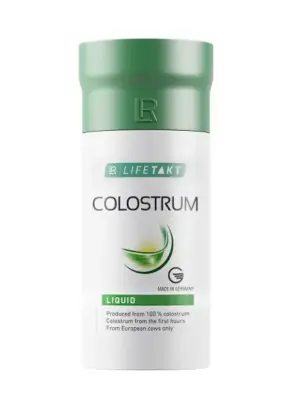
Bovine colostrum for supplements is collected from dairy cows after calving, then dried into a powder or processed into a liquid. Some products remove most of the fat and the casein, which is the main milk protein, to concentrate the other proteins. LR’s Colostrum Liquid, for example, is described on the label as defatted and decaseinated bovine colostrum.
| Feature | Colostrum | Ordinary cow’s milk |
|---|---|---|
| When it is produced | In the first few days after calving | From about the end of the first week onwards |
| Texture and colour | Thicker and more yellow | Thinner and white |
| Immunoglobulins (antibodies) | Much higher levels | Low levels |
| Growth factors and other bioactive proteins | Higher levels | Lower levels |
| Main use for people | Food supplements in small daily amounts | Everyday food and drink |
The comparison above follows the 2003 review “Bovine colostrums: a review of clinical uses”, which is one of the most cited overviews on the subject.
Why do adults take colostrum?
People come to colostrum for different reasons. Some have read about it in sports magazines, because athletes and their coaches have been interested in it for decades. Some like the idea of a natural, whole-food ingredient rather than a single synthetic vitamin. Others know it from family tradition, as cow’s colostrum, known in parts of Britain as beestings, was traditionally baked into a set pudding on farms.
There is also a broader interest in the gut and in the immune system, especially in winter. It is important to be clear here: under the rules for food supplements, a product may only say that it supports a body function if the claim is on the authorised list and the product meets the conditions. Colostrum as an ingredient does not have such a claim. That does not mean it is useless, but it does mean that honest sellers describe what colostrum is rather than promising effects. If you want to understand why supplements are worded so carefully, our article on why supplements can only say certain things explains the system.
What does the research say so far?
Researchers have studied bovine colostrum in several settings, including people in intensive physical training and some hospital patients. The 2003 review summarised early studies on body composition, athletic performance and the gut, and on special “hyperimmune” colostrum produced by cows vaccinated against particular germs. Many of these studies were small, short or used different products and doses, which makes it hard to draw firm conclusions for healthy adults.
In practical terms, that means you should be cautious about any website or advert that presents colostrum as a proven solution for anything. The fair summary is that colostrum is an interesting food with a long history, that researchers continue to study it, and that the evidence in healthy adults is limited.
Who should avoid colostrum?
Because colostrum is a dairy product and a concentrated one, it is not for everyone. Please do not take it in the following situations without advice.
- People with a cow’s milk protein allergy should avoid it entirely, because colostrum contains milk proteins.
- People with lactose intolerance should check the label for lactose and start with a small amount, or ask a pharmacist first.
- Pregnant and breastfeeding women should ask their GP or midwife before taking any supplement that has not been studied in pregnancy.
- Children should only be given colostrum supplements after talking to a doctor or health visitor.
- Anyone who takes regular medication or has a long-term illness should speak to a GP or pharmacist first, as the US National Center for Complementary and Integrative Health recommends for all supplements.
- Vegans and people who avoid animal products will want to skip it, as it comes from cows.
Liquid or capsules: what is the difference?
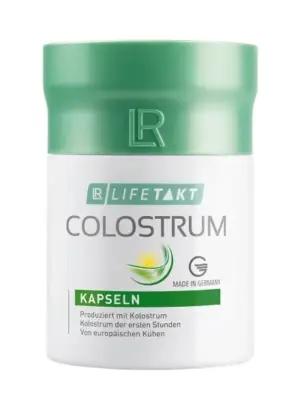
Colostrum supplements usually come as a liquid you measure out or as capsules you swallow. Neither form is better in principle; the choice depends on which you will actually take every day. LR offers both, and their daily amounts differ.
The LR Colostrum Liquid is taken as 8 ml a day, measured with a cup. It suits people who do not like swallowing capsules; follow the storage advice on the bottle once it is opened. The LR Colostrum Capsules provide 800 mg of colostrum powder in a daily dose of two capsules, which is easier to take to work or on holiday. You can compare the rest of the range in our daily supplements category.
What should you check on a colostrum label?
Whether you choose a product from us or elsewhere, a few points on the label tell you a lot about it.
- Check the daily amount of colostrum in milligrams or millilitres, because products vary widely.
- Look at whether the colostrum is whole, defatted or decaseinated, since this changes the composition.
- Read the allergen information for milk and the lactose content.
- Check for added sugars, flavourings or other ingredients you might want to avoid.
- Be wary of any wording that promises to prevent or treat illness, because such claims are not permitted for food supplements.
If you are still deciding whether you need any supplement at all, our practical UK guide to supplements is a good place to start.
If you would like to compare the two forms directly, both products are shown below:
When should you talk to a doctor?
Talk to your GP or pharmacist before starting colostrum if you are pregnant, breastfeeding, taking prescription medicines, being treated for a long-term condition or have a weakened immune system. Stop taking it and seek advice if you develop a rash, swelling of the lips or face, wheezing or stomach upset after starting, as these may be signs of a reaction to milk proteins. Swelling of the throat or difficulty breathing needs emergency help on 999.
Frequently asked questions
Is bovine colostrum the same as human colostrum?
No. Both are first milk, but they come from different species and their composition differs. Bovine colostrum is produced by cows for calves and is the type used in food supplements.
Does colostrum contain lactose?
Colostrum is a milk product, so it can contain lactose, although the amount depends on how it has been processed. Check the label and ask a pharmacist if you are lactose intolerant.
How much colostrum do people take?
The amount depends on the product. LR’s capsules provide 800 mg of colostrum powder in two capsules a day, and the liquid is taken as 8 ml a day. Always follow the dose on the pack.
Is colostrum suitable for vegetarians?
Colostrum is a dairy product rather than meat, so many vegetarians are comfortable taking it, but capsule shells and other ingredients can be of animal origin. Check the label or the product page if this matters to you.
Can colostrum replace a varied diet?
No. Like any food supplement, colostrum is meant to complement a varied, balanced diet, not to replace it.
Sources
- Bovine colostrums: a review of clinical uses, Alternative Medicine Review 2003 (PubMed)
- European Commission: EU Register of nutrition and health claims
- NCCIH: Using Dietary Supplements Wisely
- InformedHealth.org (IQWiG): What are dietary supplements?
Food supplements are not medicines and do not replace a varied, balanced diet and a healthy lifestyle. This article is general information and not medical advice.