
We are independent LR partners. The product links in this article lead to our own product pages, and orders are placed in the official LR shop.
The honest answer is that the benefits of aloe vera juice are not well proven. Researchers have studied drinkable aloe gel in small trials, mostly on blood sugar and body weight in people with diabetes or prediabetes, but the evidence is limited, and there is no authorised health claim for aloe vera in the UK or the EU. What you can say with confidence is that a well-made aloe drink is a food, that safety depends a great deal on how the leaf is processed, and that it should never replace medical treatment.
In this article we explain what aloe vera juice is, what the research has looked at so far, why the outer part of the leaf raises safety questions and who should talk to a GP before drinking it. We also explain how to read the label of an aloe drink and what any added vitamins can legitimately do.
In short
- Aloe vera juice is made from the clear inner gel of the aloe leaf, usually mixed with water, fruit juice or other ingredients.
- According to the US National Center for Complementary and Integrative Health (NCCIH), small studies suggest possible effects on blood sugar, but the evidence is limited.
- There is no authorised health claim for aloe vera, so no aloe drink may legally promise a health benefit from the aloe itself.
- Aloe latex, the yellow layer under the skin of the leaf, contains compounds called hydroxyanthracene derivatives, which EFSA considers a safety concern.
- Pregnant or breastfeeding women and anyone taking regular medication should speak to a GP or pharmacist before drinking aloe vera.
What is aloe vera juice?
Aloe vera juice, also called an aloe drinking gel, is a drink made from the inner gel of the leaves of Aloe barbadensis Miller. The gel is the clear, slightly slippery tissue in the centre of the leaf. It consists mostly of water and contains small amounts of sugars, such as the polysaccharide acemannan, as well as minerals and plant compounds. Between the green skin and the gel lies a thin yellow layer called latex, which tastes bitter and has a strong laxative effect.
This distinction matters, because the gel and the latex behave very differently in the body. Most of the safety concerns about drinking aloe relate to the latex and to extracts made from the whole leaf, not to carefully filleted inner gel. When you read about aloe vera juice, it is therefore worth checking which part of the plant a study or a product actually used.
What have studies on aloe vera juice looked at?
Scientists have been interested in drinkable aloe for several decades, but most trials are small and short. The NCCIH, part of the US National Institutes of Health, summarises the research as follows: a small number of studies suggest that aloe taken by mouth may lower blood sugar and HbA1c in people with diabetes, and one small study found a modest reduction in weight and fat mass after eight weeks of a specific aloe gel product in adults with overweight and diabetes or prediabetes. The same source states that there is not enough reliable information on whether oral aloe helps conditions such as irritable bowel syndrome.
These findings are interesting, but they come with important limits. The studies used different products and doses, they involved few people, and they lasted weeks rather than years. None of them shows that an aloe drink can replace diet, exercise or medicine, and anyone with diabetes should never change their treatment because of an aloe product. If you would like more background on daily use, our article on drinking aloe vera every day covers the practical side.
| Topic | What researchers have looked at | What we can say today |
|---|---|---|
| Blood sugar | Small trials in people with diabetes or prediabetes | Possible effect, limited evidence; not a treatment |
| Body weight | One small eight-week study of a specific gel product | Modest change in one study; not confirmed |
| Digestion and IBS | Interest from researchers, few reliable trials | Not enough reliable information |
| Short-term safety of the gel | Studies of oral aloe gel lasting up to 42 days | NCCIH describes short-term use in studies as safe |
| Latex and whole-leaf extract | Laboratory and animal studies | Safety concerns; avoid products that are not purified |
Why is there no authorised health claim for aloe vera?
In the UK and the EU, a food or food supplement may only make a health claim that has been assessed and authorised. The European Commission keeps a register of these claims. According to the Commission, claims about botanical substances, which include aloe vera, are not yet in the register because their assessment has not been finalised. In practice this means that no aloe drink may say that the aloe supports digestion, immunity or anything else.
Claims may still be made for vitamins or minerals that a drink contains in a meaningful amount. If an aloe drink is enriched with vitamin C, for example, the label may use the authorised wording for vitamin C, but the claim refers to the vitamin and not to the aloe. Our article on why supplements can only say certain things explains these rules in more detail.
Is aloe vera juice safe to drink?
For most healthy adults, a purified aloe drink used as directed appears to be well tolerated in the short term. The NCCIH notes that research studies suggest short-term use of oral aloe gel for up to 42 days is safe, but there is little data on longer use. The bigger concern is a group of substances called hydroxyanthracene derivatives, which include aloin and aloe-emodin and are found mainly in the latex. In 2018 the European Food Safety Authority concluded that these substances should be considered genotoxic and carcinogenic unless specific data show otherwise, and it could not set a safe daily intake.
In Great Britain, the Food Standards Agency published an interim position on these substances in April 2024. It summarised the views of its expert committees, noted that more recent studies are mostly negative for genetic damage in living organisms, and said that its policy group would assess whether to restrict foods containing them. NCCIH adds that aloe latex can cause abdominal pain, cramps and diarrhoea, that cases of acute hepatitis have been linked to aloe leaf extracts, and that oral aloe may be unsafe during pregnancy and breastfeeding. The practical lesson is to choose a drink made from inner gel, with aloin reduced as far as possible, and to follow the dose on the label.
How do you choose an aloe drink sensibly?
Read the label before you look at the marketing. A good aloe drink tells you how much aloe gel it contains, whether it is made from the inner leaf, what else has been added and how much you should drink per day. Our label checklist for aloe drinks goes through each point.
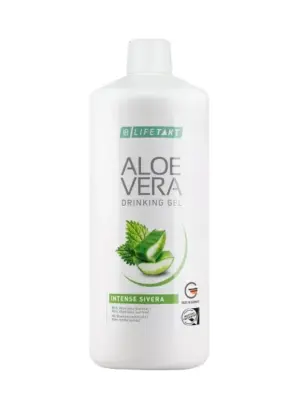
As an example, the LR Aloe Vera Drinking Gel Intense Sivera with nettle contains 90 per cent aloe vera gel, 2 per cent nettle extract and 7 per cent flower honey, according to LR. The recommended daily amount of 90 ml, taken as three servings of 30 ml, provides 80 mg of vitamin C, which is 100 per cent of the nutrient reference value. Vitamin C contributes to normal energy-yielding metabolism, to the reduction of tiredness and fatigue and to normal collagen formation for the normal function of skin. These claims apply to the vitamin C in the drink, not to the aloe or the nettle.
This is the drink we use as an example in this article. You can compare it with the other flavours in our aloe vera drinks category.
When should you see a doctor?
Talk to your GP or pharmacist before you start drinking aloe vera if you take regular medication, especially for diabetes, the heart, blood thinning or bowel problems, because some herbs and medicines can interact. Our article on aloe vera and medication lists the questions worth asking. Ask for advice first if you are pregnant, breastfeeding or planning a pregnancy, and do not give aloe drinks to young children without medical advice.
Stop drinking aloe and contact your GP if you develop diarrhoea, stomach cramps, unusual tiredness, yellowing of the skin or eyes, dark urine or itching all over the body. Seek urgent help if you have severe abdominal pain or blood in your stools. Never stop or reduce a prescribed medicine because you have started an aloe drink.
Frequently asked questions
What are the proven benefits of aloe vera juice?
There are no proven benefits that an aloe drink may legally claim for the aloe itself. Small studies have looked at blood sugar and weight, but the evidence is limited and not strong enough for an authorised health claim.
Is it safe to drink aloe vera juice every day?
Studies of purified oral aloe gel lasting up to 42 days have not shown safety problems, according to NCCIH, but long-term data are scarce. Choose a drink made from inner gel, follow the daily amount on the label and ask your GP if you take medication.
Does aloe vera juice work as a laxative?
The laxative effect comes from aloe latex, not from the inner gel. Products made from purified gel should not have this effect, and using aloe latex as a laxative is not recommended because of safety concerns.
Can I drink aloe vera juice while pregnant?
NCCIH states that oral aloe may be unsafe during pregnancy and breastfeeding. Speak to your midwife or GP before drinking any aloe product during this time.
Why do some aloe drinks contain added vitamins?
Vitamins such as vitamin C have authorised health claims, while aloe does not. When a drink contains enough of a vitamin, the label may describe what that vitamin does in the body.
Sources
- NCCIH (US National Institutes of Health): Aloe Vera, usefulness and safety
- EFSA: Safety of hydroxyanthracene derivatives for use in food (2018)
- Food Standards Agency: Interim position on the safety of hydroxyanthracene derivatives for use in food (April 2024)
- European Commission: EU Register of nutrition and health claims
Food supplements are not medicines and do not replace a varied, balanced diet and a healthy lifestyle. This article is general information and not medical advice.