
We are independent LR partners. Links in this article lead to our product pages, and orders are placed in the official LR shop.
Diet replacement shakes can help some adults lose weight, but only when they replace specific meals inside a lower-calorie diet and the rest of the day is built around normal food. Under the rules used in Great Britain and the EU, substituting two of the main daily meals of an energy restricted diet with meal replacements contributes to weight loss, and substituting one main meal contributes to the maintenance of weight after weight loss. A shake on top of your usual meals does the opposite of what you want.
This guide explains what makes a product a real meal replacement, how a sensible day with shakes looks, who should not diet this way, and how to move back to ordinary meals without regaining everything you lost.
In short
- A meal replacement for weight control must provide between 200 and 250 kcal per meal, according to Regulation (EU) 2016/1413, which still applies in Great Britain as retained law.
- Protein has to provide 25 to 50 per cent of the energy in each prepared meal, and fat no more than 30 per cent.
- Replacing two main meals a day as part of a lower-calorie diet contributes to weight loss, and replacing one main meal a day helps you keep the weight off afterwards.
- You still need a proper third meal, enough fluid through the day and other foods alongside the shakes.
- Pregnant and breastfeeding women, teenagers, people with eating disorders and anyone on medication for diabetes or blood pressure should speak to a GP before changing their diet this way.
What exactly is a diet replacement shake?
A diet replacement shake is a powdered drink or soup that is designed to stand in for a whole meal while supplying a controlled amount of calories, protein, vitamins and minerals. The word “shake” on a label does not make a product a meal replacement. Many protein drinks and so-called fat loss shakes are simply snacks.
The products that may legally say they help with weight loss have to meet a fixed recipe. Regulation (EU) 2016/1413 sets the conditions per prepared meal, and you can check most of them against the nutrition table on the pack.
| What the rules require per meal | Amount | Why it matters to you |
|---|---|---|
| Energy | 200 to 250 kcal | It is enough to function on, and low enough to create a calorie gap |
| Protein | 25 to 50 per cent of the energy | Protein helps you feel satisfied and keeps the meal balanced |
| Fat | No more than 30 per cent of the energy, with at least 1 g linoleic acid | The calories stay low while an essential fatty acid is still provided |
| Vitamins and minerals | At least 30 per cent of the reference values | You are less likely to fall short when you eat less food overall |
| Sodium and potassium | At least 172.5 mg sodium and 500 mg potassium | These minerals stay in a sensible range |
The values apply to the shake prepared as the label says. If the instructions say to mix the powder with semi-skimmed milk or a fortified plant drink and you use water instead, you change the meal and it may no longer meet the standard. Following the preparation instructions is therefore part of using the product properly.
Do weight loss shakes actually work?
They work for the reason any diet works: you eat fewer calories than you use. A shake makes this easier because the portion is measured for you and you do not have to plan, weigh or count. If you usually skip breakfast and then graze all morning, a measured meal can make a real difference.
The authorised wording is precise, and it is worth reading carefully. Substituting two of the main daily meals of an energy restricted diet with meal replacements contributes to weight loss. Substituting one of the main daily meals of an energy restricted diet with a meal replacement contributes to the maintenance of weight after weight loss. In both cases it is important to drink enough fluid every day, and the products only serve their purpose as part of an energy restricted diet that also includes other foods.
What shakes do not do is burn fat, speed up your metabolism or target your tummy.
How do you use meal replacement shakes for weight loss sensibly?
The most common mistake is to treat shakes as an extra rather than a swap. A sensible plan for the weight loss phase replaces two main meals and keeps one proper meal, plus one or two small snacks if you need them. Here is a day that many people find realistic.
- For breakfast, you drink a shake prepared exactly as the pack describes, with a large glass of water or a cup of tea.
- At lunchtime, you have a second shake or a meal-replacement soup, which feels more like lunch on a cold day in the office.
- Mid-afternoon, you eat a piece of fruit, a few raw vegetables or a small pot of plain yoghurt if you are hungry.
- In the evening, you eat a normal meal: half the plate vegetables or salad, a palm-sized portion of fish, chicken, eggs, tofu or beans, and a modest portion of potatoes, rice or wholegrain bread.
- Throughout the day, you drink water, tea or coffee without sugar, because fluid is part of the deal.
If you would rather eat lunch with colleagues, swap breakfast and dinner instead. The order does not matter; the number of replaced meals and the quality of the meal you do eat matter much more. For ideas on keeping that real meal light, see our guide to low calorie lunch ideas for busy workdays.
Which shakes and soups could you choose?
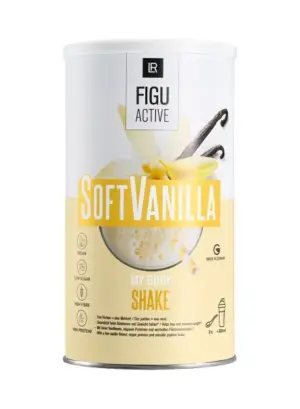
Taste matters more than people expect, because a shake you dislike will not last a week. It helps to have one sweet option for breakfast and one savoury option for lunch. In the LR range, the FIGUACTIVE Soft Vanilla Shake is a plain, familiar flavour that works in the morning, the FIGUACTIVE Smooth Cocoa Shake suits people who miss something chocolatey, and the FIGUACTIVE Juicy Tomato Soup gives you a warm, savoury lunch instead of another sweet drink.
Whatever you choose, read the pack before you start. Check that it says it is a meal replacement for weight control, check the calories per prepared meal, and follow the mixing instructions to the letter. All of the shakes and soups are listed in our meal replacement shakes category.
Who should not diet with meal replacement shakes?
Meal replacements are designed for overweight adults who are otherwise healthy. They are not suitable for everyone, and some people need medical advice before cutting calories at all.
- Women who are pregnant or breastfeeding should not follow a weight loss diet without their midwife or GP.
- Children and teenagers are still growing and should not use meal replacements to lose weight.
- Anyone who has had an eating disorder, or who notices that dieting makes them anxious or preoccupied with food, should talk to a GP first.
- People taking medication for diabetes or high blood pressure need their doses reviewed, because eating less can change how those medicines work.
Very low calorie programmes that replace almost every meal are a different thing altogether. They should only be followed with medical supervision.
How do you keep the weight off afterwards?
The end of the shake phase is where most diets fail, because people return straight to their old routine. A gradual step down works better. When you reach a weight you are happy with, replace one main meal instead of two and eat two ordinary meals.
Use this phase to practise the habits that will carry you through the next year. Cook a few simple meals you enjoy, keep portions of rice and pasta measured, and notice which situations, such as late nights or the biscuit tin at work, trigger extra eating. If January is usually your danger zone, our article on losing weight after Christmas without crash dieting has more ideas.
Are there side effects to watch out for?
Most people feel hungrier for the first few days, and some get constipated because they are eating less fibre. Drinking enough, keeping vegetables in your main meal and adding a piece of fruit as a snack usually helps. If you feel dizzy, faint or unwell, eat a normal meal and speak to a pharmacist or GP before carrying on.
When should you see a doctor?
See your GP before starting if you have diabetes, heart disease, kidney disease, high blood pressure or take regular medication. Also book an appointment if you are losing weight without trying, if you feel faint or have palpitations while dieting, if your periods stop, or if you notice that food and weight are taking over your thoughts. A GP can also point you to local weight management services.
If you would like to compare the flavours before choosing, these are the three we suggest starting with:


Frequently asked questions
How many shakes a day should I have?
For weight loss, the authorised use is two meal replacements a day in place of two main meals, plus one normal meal. For keeping weight off, it is one replacement a day. Having more than two is not part of this approach.
Can I drink a shake as well as my normal meals?
You can, but you will not lose weight that way, because a shake adds 200 to 250 kcal. A meal replacement only helps when it truly replaces a meal.
How long can I use meal replacement shakes?
Many people use two shakes a day for a few weeks or months and then step down to one a day for maintenance. If you plan to use them for a long time, or you have a health condition, ask your GP to keep an eye on things.
Can I mix the powder with water instead of milk?
Only if the pack says so. The nutrition values and the legal standard apply to the product prepared as described, so changing the liquid changes the meal.
Sources
- Commission Regulation (EU) 2016/1413, Annex: meal replacement claims and conditions of use (legislation.gov.uk)
- Commission Regulation (EU) 2016/1413, introduction and recitals (legislation.gov.uk)
- European Commission: EU Register of nutrition and health claims
- NCCIH: Using Dietary Supplements Wisely
Food supplements are not medicines and do not replace a varied, balanced diet and a healthy lifestyle. This article is general information and not medical advice.